
As a sport, bowling has been around for centuries and has evolved over time to include different styles and techniques. One of the most popular styles of bowling today is two-handed bowling. This style has gained popularity in recent years and is slowly taking the sport by storm. Two-handed bowling is a technique that involves using both hands to throw the ball down the lane.
If you’re new to two-handed bowling or looking to improve your game, this tutorial is for you. In this article, I will guide you through the basics of two-handed bowling, from understanding the technique to perfecting your swing and roll.
We’ll also cover generating spin and power, mastering control and accuracy, and the mental game of bowling. Additionally, we’ll explore the pros and cons of two-handed bowling, successful two-handed bowlers, and the equipment you need to excel in this style of bowling.
Key Takeaways
- Two-handed bowling is a popular technique that involves using both hands to throw the ball down the lane.
- Understanding the basics of two-handed bowling, such as the stance and grip, approach and release, and swing and roll, is crucial to improving your game.
- Successful two-handed bowlers have mastered the technique, generated spin and power, and have control and accuracy over their shots.
Table of Contents
Understanding Two-Handed Bowling
As the name suggests, two-handed bowling involves using both hands to throw the ball down the lane. This style of bowling has become increasingly popular in recent years, with many professional bowlers adopting this technique. In this section, I will provide an overview of two-handed bowling and explain how it differs from traditional one-handed bowling.
The main difference between two-handed bowling and traditional bowling is the grip and release of the ball. In two-handed bowling, the bowler grips the ball with both hands, positioning the dominant hand on top of the ball and the non-dominant hand underneath. This grip allows the bowler to generate more power and speed, resulting in a more powerful throw.
Another key difference is the release of the ball. In traditional bowling, the bowler releases the ball with a single hand, using a backswing and follow-through motion. In two-handed bowling, the bowler uses a more fluid motion, with both hands releasing the ball at the same time. This technique allows the bowler to generate more revolutions on the ball, resulting in a greater hook potential.
Learning how to bowl two-handed can take time and practice. It’s important to start with the basics, such as getting the grip right and practicing the release motion. It’s also important to work on developing a consistent approach and timing, as this will help you generate more power and accuracy.
The Stance and Grip
When it comes to two-handed bowling, the stance and grip are crucial elements that can help you improve your game. Here’s what you need to know about the proper stance and grip for two-handed bowling.
The Stance
The stance is the foundation of your bowling delivery. To start, stand up straight with your feet together and facing forward. Then, take a small step forward with your non-dominant foot, followed by a larger step forward with your dominant foot. Your feet should be shoulder-width apart, with your dominant foot slightly ahead of your non-dominant foot.
Bend your knees slightly and shift your weight onto your dominant foot. Keep your back straight, and your eyes focused on your target. This is your starting position, and it’s important to maintain this stance throughout your delivery.
The Grip
The grip is another important aspect of two-handed bowling. Unlike traditional one-handed bowling, where the ball is held with one hand, two-handed bowlers use both hands to grip the ball.
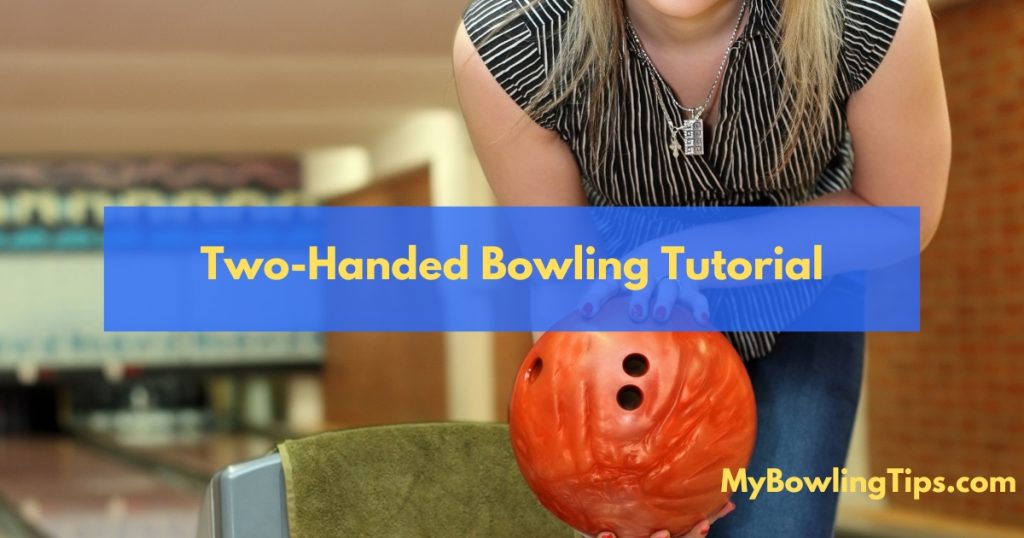
To grip the ball, place your non-dominant hand on the bottom of the ball, with your fingers spread wide and your palm facing up. Then, place your dominant hand on top of the ball, with your fingers inserted into the holes and your palm facing down.
Make sure your grip is firm but not too tight. You want to be able to control the ball, but you don’t want to strain your hands or wrists.
Final Thoughts
The stance and grip are two of the most important elements of two-handed bowling. By mastering these techniques, you can improve your accuracy, power, and overall performance on the lanes. Remember to maintain a confident, neutral tone when discussing these techniques, and avoid making exaggerated or false claims about their effectiveness.
The Approach and Release
When it comes to two-handed bowling, the approach and release are key components to a successful throw. As I step up to the lane, I focus on my approach, which consists of four steps: the pushaway, pivot step, slide step, and the final step.
During the pushaway, I extend the ball out in front of me, allowing it to swing naturally behind me. As I take my pivot step, I turn my body slightly to the left, positioning myself for the slide step. The slide step is where I begin to transfer my weight from my back foot to my front foot, maintaining a smooth and consistent motion.
As I take my final step, I focus on my release. The release is where I let the ball go, allowing it to roll off my fingers with a powerful hook. It’s important to maintain a relaxed grip on the ball, letting it roll off your fingers naturally.
One of the key components to a successful release is the pivot step. This step helps to generate power and momentum, allowing you to throw the ball with more force. By turning your body slightly to the left, you can create a natural swing path, which will help you to release the ball with more accuracy.
Another important aspect of the release is the slide step. This step allows you to maintain your balance and control, ensuring that you release the ball at the right moment. By keeping your weight centered over your feet, you can create a smooth and consistent slide, which will help you to release the ball with more accuracy.
Perfecting the Swing and Roll
When it comes to two-handed bowling, perfecting the swing and roll is essential. It’s the foundation of your game and can make all the difference in your scores. In this section, I’ll share some tips and tricks to help you perfect your swing and roll.
The Swing
The swing is the first part of the two-handed bowling motion. It’s where you bring the ball back and then forward. To perfect your swing, you need to focus on a few key things:
- Back Swing: Make sure your back swing is smooth and controlled. You don’t want to rush it or get too tense. Keep your arm relaxed and let the ball swing back naturally.
- Second Step: Your second step is important for setting up your swing. Make sure it’s balanced and controlled. You don’t want to rush it or take too big of a step.
- Roll: As you bring the ball forward, focus on the roll. You want to create a smooth, consistent roll that will help you hit your target.
The Roll
The roll is the second part of the two-handed bowling motion. It’s where you release the ball and let it roll down the lane. To perfect your roll, you need to focus on a few key things:
- Release: Make sure your release is smooth and consistent. You want to release the ball at the same point every time.
- Follow Through: Your follow through is important for creating a consistent roll. Make sure you follow through with your arm and keep your wrist relaxed.
- Target: Always focus on your target. Keep your eyes on where you want the ball to go and adjust your roll as needed.
With these tips, you’ll be well on your way to perfecting your swing and roll in two-handed bowling. Remember to stay relaxed, stay focused, and keep practicing.
Generating Spin and Power
As a two-handed bowler, generating spin and power is crucial to your success. With the proper technique, you can create more leverage and rotation, which in turn will generate more spin and power on your ball.
One of the most important factors in generating spin and power is your release. As you release the ball, make sure to keep your wrist firm and your fingers behind the ball. This will allow you to create a more powerful and consistent release, which will translate into more spin and power on the ball.
In addition to your release, your approach and footwork are also critical to generating spin and power. Make sure to maintain a balanced and consistent approach, with your feet and body aligned towards your target. This will allow you to generate more power and momentum on your approach, which will translate into more spin and power on the ball.
Another important factor in generating spin and power is your ball speed. As a two-handed bowler, you have the advantage of being able to generate more speed and power on your ball. However, it’s important to find the right balance between speed and control. Too much speed can result in a loss of accuracy and control, while too little speed can result in a lack of power and spin.
By focusing on your release, approach, footwork, and ball speed, you can generate more spin and power on your ball as a two-handed bowler. With practice and dedication, you can master the techniques and skills needed to become a successful two-handed bowler.
Mastering Control and Accuracy
When it comes to two-handed bowling, mastering control and accuracy is essential. Without these skills, it can be difficult to hit your target consistently and achieve the scores you’re aiming for. Here are some tips to help you improve your control and accuracy:
1. Stabilize Your Non-Dominant Hand
One of the keys to two-handed bowling is using your non-dominant hand to stabilize the ball. This hand should be placed on the side of the ball, with your fingers spread out to create a stable base. By keeping your non-dominant hand in place, you can reduce the amount of wobble in your throw and improve your accuracy.
2. Focus on Your Target
Another important aspect of control and accuracy is focusing on your target. Before you start your approach, take a moment to visualize where you want the ball to go. Then, as you release the ball, keep your eyes fixed on that target. By maintaining your focus, you can make adjustments to your throw in real-time and increase your chances of hitting your mark.
3. Use the Right Ball
The ball you use can also have a big impact on your control and accuracy. Look for a ball that is well-suited to your style of play, with the right weight and surface texture. A ball that is too heavy or too light can throw off your balance, while a surface that is too slick or too rough can affect your grip and release.
4. Practice, Practice, Practice
Finally, the most important factor in mastering control and accuracy is practice. Two-handed bowling is a skill that takes time and effort to develop, so don’t get discouraged if you don’t see immediate results. Instead, focus on practicing consistently and making small improvements over time. With patience and dedication, you can become a master of two-handed bowling and achieve the scores you’ve always dreamed of.
The Mental Game of Bowling
I believe that the mental game of bowling is just as important as the physical game. Having a positive mindset and being able to stay focused can make a huge difference in your results. Here are a few tips that have helped me improve my mental game:
- Stay patient: Bowling is a game of patience. You can’t expect to get a strike on every shot, so it’s important to stay patient and not get frustrated when things don’t go your way. Take a deep breath, refocus, and try again.
- Visualize success: Before each shot, take a moment to visualize yourself hitting your target and getting the result you want. This can help you stay focused and confident.
- Stay in the moment: Don’t get too caught up in past shots or worry too much about future ones. Stay in the moment and focus on the shot you’re about to take.
- Believe in your skills: Trust in your abilities and don’t second-guess yourself. If you’ve put in the practice and have the skills, believe that you can make the shot.
- Stay positive: Even when things aren’t going your way, try to stay positive. A negative mindset can lead to a downward spiral, so focus on the good shots you’ve made and keep pushing forward.
By incorporating these mental game strategies into your bowling routine, you can improve your focus, confidence, and ultimately your results.
Two-Handed Bowling Drills
As a two-handed bowler, I have found that practicing specific drills has helped me improve my technique and overall performance. Here are some two-handed bowling drills that I have found to be effective:
1. Swing and Slide Drill
The swing and slide drill is a great way to work on your timing and release. To perform this drill, start with the ball down by your knees with your arms fully extended. Next, raise the ball up to your chest, and then swing it back and forth a few times. As you swing the ball forward, slide your right foot forward (if you’re right-handed) and release the ball. This drill will help you develop a smooth, consistent swing and release.
2. Foul Line Drill
The foul line drill is a simple but effective way to work on your balance and follow-through. To perform this drill, start by standing at the foul line with your feet shoulder-width apart. Hold the ball with both hands and take a few steps forward, keeping your eyes focused on your target. As you approach the foul line, release the ball and follow through with your arm extended towards your target. This drill will help you develop a balanced finish and improve your accuracy.
3. Targeting Drill
The targeting drill is a great way to work on your accuracy and consistency. To perform this drill, set up a target (such as a spare or pin) on the lane. Start by standing at the foul line with your feet shoulder-width apart and your eyes focused on the target. Take a few steps forward and release the ball, aiming for the target. Repeat this drill several times, adjusting your aim as necessary to hit the target consistently.
4. Release Drill
The release drill is a great way to work on your release and follow-through. To perform this drill, start with the ball down by your knees with your arms fully extended. Next, swing the ball back and forth a few times, and when you are ready to go, roll your fingers around the ball as you release it. This drill will help you develop a smooth, consistent release and follow-through.
5. Spare Shooting Drill
The spare shooting drill is a great way to work on your spare shooting skills. To perform this drill, set up a spare (such as the 7-10 split) on the lane. Start by standing at the foul line with your feet shoulder-width apart and your eyes focused on the spare. Take a few steps forward and release the ball, aiming to hit the spare. Repeat this drill several times, adjusting your aim as necessary to hit the spare consistently.
By practicing these two-handed bowling drills, you can improve your technique, accuracy, and overall performance on the lanes. Remember to focus on one drill at a time and practice regularly to see the best results.
Pros and Cons of Two-Handed Bowling
As someone who has been practicing two-handed bowling for a while, I have come to appreciate the benefits and drawbacks of this technique. Here are some of the pros and cons of two-handed bowling:
Pros
- Increased power and speed: One of the main advantages of two-handed bowling is that it allows for more power and speed in your shot. By using both hands to support the ball, you can generate more force and momentum, resulting in a faster and more powerful shot.
- Higher rev rate: Two-handed bowling also tends to produce a higher rev rate, which can help you achieve better pin carry and more strikes. With more revs on the ball, it can be easier to control the hook and angle of your shot.
- Less strain on the wrist: Using two hands to support the ball can also reduce the strain on your wrist and forearm. This can be especially beneficial for bowlers who have had wrist or arm injuries in the past.
Cons
- Difficulty with accuracy: One of the biggest challenges of two-handed bowling is maintaining accuracy. With the added power and speed, it can be harder to control the ball and hit your desired target. It can also be difficult to adjust to different lane conditions and oil patterns.
- Potential for unfair advantage: Some people argue that two-handed bowling gives an unfair advantage over traditional one-handed bowling. However, this is a matter of debate and is not supported by any official rules or regulations.
- Higher risk of injury: While two-handed bowling can reduce strain on the wrist and forearm, it can also put more pressure on the back and shoulder muscles. This can increase the risk of injury, especially if proper technique and form are not used.
Overall, two-handed bowling can be a powerful and effective technique for some bowlers. However, it also has its challenges and drawbacks. It is important to consider your own strengths and weaknesses as a bowler and decide if two-handed bowling is right for you.
Successful Two-Handed Bowlers
As a two-handed bowler, it’s important to learn from the best in the game. Professional bowlers like Jason Belmonte have revolutionized the sport with their unique style and impressive success on the lanes.
Belmonte is widely regarded as one of the best two-handed bowlers in the world, with a record of 31 PBA Tour titles and 15 major championships. He has perfected the art of generating power and hook while bowling, and his success is a testament to the effectiveness of the two-handed style.
But it’s not just the professionals who can be successful with two-handed bowling. Many league bowlers have found success with this style as well. With practice and dedication, anyone can learn to bowl with two hands and achieve impressive results on the lanes.
One key to success with two-handed bowling is to find the right equipment. This includes a ball that is suited to your style and a comfortable grip that allows you to generate maximum power and control. It’s also important to work on your technique and form, focusing on proper footwork, arm swing, and release.
Another important factor in successful two-handed bowling is mental preparation. This includes staying focused and confident, visualizing your shots, and staying calm under pressure. With the right mindset and preparation, you can achieve great things with the two-handed style.
Bowling Equipment for Two-Handed Bowlers
As a two-handed bowler, having the right equipment can make a big difference in your game. Here are some key pieces of equipment to consider:
Bowling Ball
Choosing the right bowling ball is crucial for any bowler, but it’s especially important for two-handed bowlers. You’ll want to look for a ball that is designed for two-handed bowlers, as these balls are typically lighter and have a larger core, which helps generate more revs. If you need some help choosing your ball, we have a post about the best bowling balls for two-handers.
Bowling Shoes
Bowling shoes are another important piece of equipment for two-handed bowlers. Look for shoes with a sliding sole on the non-dominant foot and a traction sole on the dominant foot. This will help you maintain your balance and generate more power in your slide. Some popular bowling shoes for two-handed bowlers include the Dexter SST 8 Pro and the Brunswick Vapor.
On Track Pro Shop
If you’re looking for expert advice on bowling equipment, On Track Pro Shop is a great resource. They offer a wide range of bowling balls, shoes, and accessories, and their staff can help you find the perfect equipment for your game. They also offer ball drilling services to ensure that your ball fits your hand perfectly.
Frequently Asked Questions
Is there an advantage to using the two-handed bowling technique?
Yes, there are several advantages to using the two-handed bowling technique. The most significant advantage is increased rev rate, which leads to more hook on the ball and a higher chance of striking. Two-handed bowlers also tend to have more control over the ball and can generate more power, making it easier to knock down the pins.
How does the two-handed bowling release differ from traditional bowling?
The two-handed bowling release differs from traditional bowling in that the bowler uses both hands to release the ball. The non-bowling hand is used to support the ball and provide additional power, while the bowling hand is used to impart spin and control the direction of the ball. The release is typically more fluid and faster than traditional bowling.
What are some tips for improving two-handed bowling technique?
Some tips for improving two-handed bowling technique include practicing proper footwork, maintaining a consistent arm swing, and finding the right ball weight and grip. It’s also important to work on developing a consistent release and to focus on hitting the same target on each shot.
Do two-handed bowlers use the finger holes on the ball?
Yes, two-handed bowlers do use the finger holes on the ball. The non-bowling hand is used to support the ball and provide additional power, while the bowling hand is used to control the direction and spin of the ball. The finger holes are an important part of the grip and release for two-handed bowlers.