

Gutter balls are a dreaded part of bowling, where the ball veers off-course and lands in the gutters on either side of the lane. They typically measure around 2-3 feet wide.
Gutter balls occur when the bowler fails to keep the ball within the boundaries of the lane. It’s disheartening, as it results in zero points and lowers scores. This is why the gutters exist – to prevent extreme angles and spins from being used.
Successfully avoiding gutter balls requires focus on approach, release, and accuracy. Improving technique is key to maintaining control of the ball’s trajectory. Bowlers should adjust their position, pay attention to their footwork, and aim with precision for the best results.
Gutter balls can be infuriating, even for experienced bowlers. Concentrate on your form and avoid those challenging gutters for a higher score!
Table of Contents
What is a Gutter Ball?
A gutter ball in bowling is when the ball lands in the gutter without hitting any pins. It usually leads to zero points. Even experienced bowlers can experience them.
The goal is to hit the 10 pins. But, incorrect release technique, lack of spin or accuracy, or lane conditions can cause the ball to go in the gutter. This can be disappointing.
Gutter balls don’t offer any points. They can result in a zero score for that frame. Yet, these are part of the game and even the best players experience them. Don’t let them impact your enjoyment.
To reduce gutter balls, practice your release technique and aim for accuracy. Pay attention to lane conditions and adjust your strategy. Keep a positive mindset and don’t let frustration take over. Gutter balls are just bad karma for those who thought they could conquer a sport with a name that sounds like a cereal bowl.
Causes of a Gutter Ball
To avoid gutter balls in bowling and improve your game, understanding the causes behind them is crucial. Inadequate bowling technique, unfavorable lane conditions, and equipment issues all contribute to this frustrating outcome. Let’s dive into each of these factors and explore how they can lead to unfortunate gutter balls during your bowling sessions.
Incorrect Bowling Technique
Gutter balls can really wreck a bowler’s game. To avoid them, remember these points:
- Grip: Hold the ball right, not too tightly or too loosely.
- Footwork: Balance helps to control the release.
- Release: Put the ball out at the right moment and spin it correctly.
These tips will help your bowling. But you also need to find your own style. Go ahead and experiment – don’t be afraid to try something new.
So, if you want to avoid gutter balls, you need to use the right grip, footwork and release. Plus, keep an open mind to personal technique. Next time you go bowling, aim to shine!
If you want to improve your bowling technique we have a post with Bowling Tips and Tricks that can help you bowl better.
Lane Conditions

Lane conditions can be perplexing. Let’s explore some key factors that affect them:
- Oil Pattern: Oil on the lane affects ball behavior. Patterns can be dry or heavily oiled.
- Length: The length of the oil pattern affects how far the ball skids.
- Ratio: The ratio between oil on the inside and outside parts of the lane affects ball motion.
- Breakdown: Oil patterns break down over time, changing shot dynamics. Bowlers must adapt.
I once faced tricky lane conditions during a tournament. The oil pattern was long with a high ratio. This required me to adjust my line and delivery. However, I struggled due to varying friction levels.
Equipment Issues
The condition of a bowling lane is very important. Irregularities or imperfections can cause your ball to go off course, resulting in a gutter ball.
Plus, your bowling ball’s weight and grip are key. If it is too light or the finger holes don’t fit, it can lead to a bad throw.
Another factor to consider is your bowling shoes. Worn-out soles or a lack of traction can make approaching and releasing the ball hard, resulting in a gutter shot.
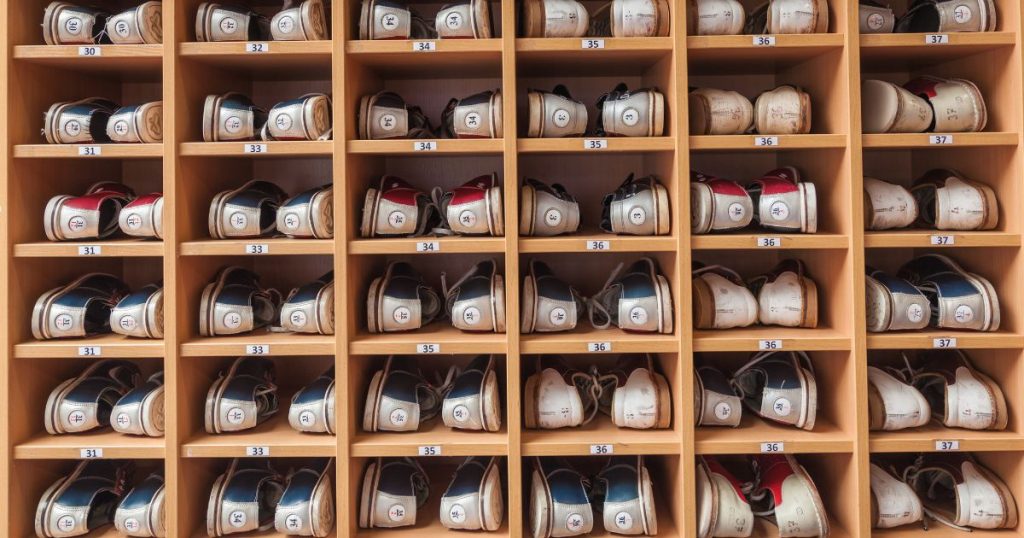
Using inadequate equipment can harm your performance. Get suitable gear for the best results.
Pro Tip: To reduce potential issues and increase your chances of getting those strikes, make sure to regularly inspect and maintain your equipment!
How to Avoid Gutter Balls
To avoid gutter balls in bowling, arm yourself with the necessary skills, adapt to lane conditions, and use suitable equipment. Discover the proper bowling technique, learn to adjust to varying lane conditions, and make use of the right equipment for a more successful and enjoyable bowling experience.
Proper Bowling Technique
Steps to improve your bowling technique:
- Stand with feet shoulder-width apart and parallel. Distribute weight evenly. Bend knees slightly. Avoid leaning too much.
- Take a smooth, consistent approach. Start with small steps with non-dominant foot. Then longer strides with dominant foot. Focus eyes on target. Keep arm swing relaxed.
- Reach foul line and release ball smoothly. No jerking or twisting wrist. Release at same spot each time for consistency. Follow through with arm towards target.
- After releasing, stay balanced. Follow through with arm until it reaches highest point. This gives max power and accuracy.
- Visualize success. Picture yourself hitting pins dead center. This boosts confidence and focus.
- Experiment with finger placement. Change where you place fingers in the ball. Alters trajectory and spin rate. Adapt to different lane conditions.
- Consult a pro. Seek guidance from a coach. Analyze technique and get personalized tips.
- Hit the lanes! Don’t miss out. Elevate your game and get higher scores. Forget gutter balls!
Adjusting to Lane Conditions
To adjust to lane conditions, you must consider factors, like oil patterns, lane topography, temperature, and humidity. By understanding how these elements affect your ball’s movement, you can make the right adjustments for success.
Oil Patterns: Look at the pattern length, volume, and shape before making any changes. If more oil is on the front part of the lane, use a ball with strong backend reaction. If it’s in the back, get a ball with early roll capabilities.
Lane Topography: Uneven surfaces can mess with shot alignment. Notice slopes and depressions and adapt your approach accordingly. If you get a consistent hook due to unevenness, change your starting position or target zone.
Temperature and Humidity: These can affect oil viscosity and friction levels. Warmer temps increase friction and hook potential. Higher humidity may alter oil absorption rates on wooden lanes. Pay attention to these factors when adjusting.
By considering these elements, you can optimize your performance. For an extra edge, experiment with equipment combos during practice to find the best fit for specific lane conditions.
Using the Right Equipment
To avoid gutter balls, you need the right equipment. Get a bowling ball that fits well and comfortable shoes with proper grip. Finger inserts can be useful too. Wrist support helps maintain consistency in your release and reduces wrist injuries.
Want to up your game? Invest in professional customization of your ball. A study by The Sports Journal found bowlers with custom-fitted equipment had higher average scores than those with standard equipment.
Don’t let the gutters win – get your bowling gear sorted!
Tips and Strategies for Consistent Bowling Scores
To improve your bowling scores consistently, target the right spot, adjust ball speed and angle, and understand lane patterns. Each of these sub-sections offers a solution for enhancing your performance on the bowling alley. Let’s dive into the details and discover how these techniques can help you avoid those dreaded gutter balls in bowling.
Targeting the Right Spot
When choosing a target spot, consider the lane’s characteristics. Things like oil and friction levels can affect how the ball rolls and interacts with pins. Adjust your target spot based on the lane conditions for better chances of a strike or spare.
A table shows target spots based on lane conditions:
| Lane Condition | Ideal Target Spot |
|---|---|
| Dry | 10 |
| Medium | 13 |
| Heavy | 17 |
As the lane gets oilier, shift your aim to the right. This helps the ball skid.
Also, factor in your own style. Hand positioning, release techniques, and ball speed can influence where you should aim. Experiment during practice to see what works best for you.
Did you know that targeting spots on bowling lanes dates back centuries to ancient Egypt? Hieroglyphs show people playing bowls and aiming for spots on makeshift lanes with various balls.
Adjusting Ball Speed and Angle
- Step 1: Experiment with Different Ball Speeds. Find a comfortable starting point, then slowly increase or decrease it to see the effect on your shots. This will help you find the right speed for your bowling style.
- Step 2: Adjust the Angle of Approach. Try changing the angle you approach the lane. A slight change can make a big difference in the ball’s trajectory, enabling you to hit the target more consistently.
- Step 3: Observe and Analyze Ball Motion. Keep an eye on how the ball reacts to various speeds and angles. Make a note of any patterns, like hook potential or skid characteristics, and use this to make adjustments.
- Step 4: Adapt to Lane Conditions. Different lanes need different adjustments. On dry lanes, use a faster speed and more direct angle. On oily lanes, go for a slower speed and a wider angle.
- Step 5: Practice Consistently. To become consistent, regularly incorporate adjustments in your training sessions. This helps you develop muscle memory and improve your ability to adjust speed and angle in real games.
To refine control over ball speed and angle even further, check out these details:
- – Position yourself correctly before release.
- – Swing your arm smoothly and straight.
- – Maintain a steady tempo for each throw.
By following these steps, you’ll be able to adjust ball speed and angle accurately. Knowing how to do this will lead to better scores and better performance overall. Understanding lane patterns is key to success in bowling. So, crack the code and start winning!
Understanding Lane Patterns
| Column 1 | Column 2 | Column 3 | Column 4 |
|---|---|---|---|
| Pattern | Oil Length | Volume | Difficulty |
| House Shot | Medium | Medium | Easy |
| Sport Shot | Long | Heavy | Difficult |
Understanding lane patterns involves recognizing oil length, volume, and difficulty levels. For example, a house shot has medium oil and volume, making it simpler than a sport shot with long oil and heavy volume.
The idea of creating patterns on bowling lanes dates back to the early days of bowling. In the past, oils were randomly applied on lanes. But, as the sport progressed, experts realized that consistent and well-defined patterns improved competitiveness and encouraged players to come up with various strategies.
Conclusion
Gutter balls in bowling can be a real bummer. They happen when no pins are hit. Gutters are on each side of the lane, stopping the ball from going off track. It’s when a bowler messes up their shot alignment or spin.
But there is more to it. Some players use the gutter strategy. This means they curve the ball to the edge of the lane. It hooks back into play and can help score higher. So next time you see someone bowl an odd shot, it might be on purpose!
Tip: To avoid gutter balls, practice adjusting your alignment and spin. Figure out what works best for you!
Frequently Asked Questions
How does a gutter ball happen?
A gutter ball occurs when the bowler fails to properly release the ball or aims it too far towards the edge of the lane. This causes the ball to slide off the lane and into the gutter before reaching the pins.
Do gutter balls count as any points?
No, gutter balls do not count as any points or score. Since the ball does not hit any pins, the throw is considered a zero. It is important to avoid gutter balls to accumulate points in bowling.
Are gutter balls common among beginners?
Yes, gutter balls are quite common among beginners. It takes practice and skill to develop the right technique for accurate throws. As beginners work on their aim and release, gutter balls become less frequent.
Is there any strategy to avoid gutter balls?
Yes, there are a few strategies to minimize the occurrence of gutter balls. This includes maintaining a consistent and straight arm swing, focusing on hitting the pocket area, and avoiding excessive force or spin on the ball.
Are there any instances where a gutter ball is beneficial?
In most cases, a gutter ball is seen as a mistake. However, some bowling alleys have special rules or variations where hitting a specific combination of pins after a gutter ball can result in bonus points. This is known as “lucky strike” or “lucky gutter” in certain game variations.